



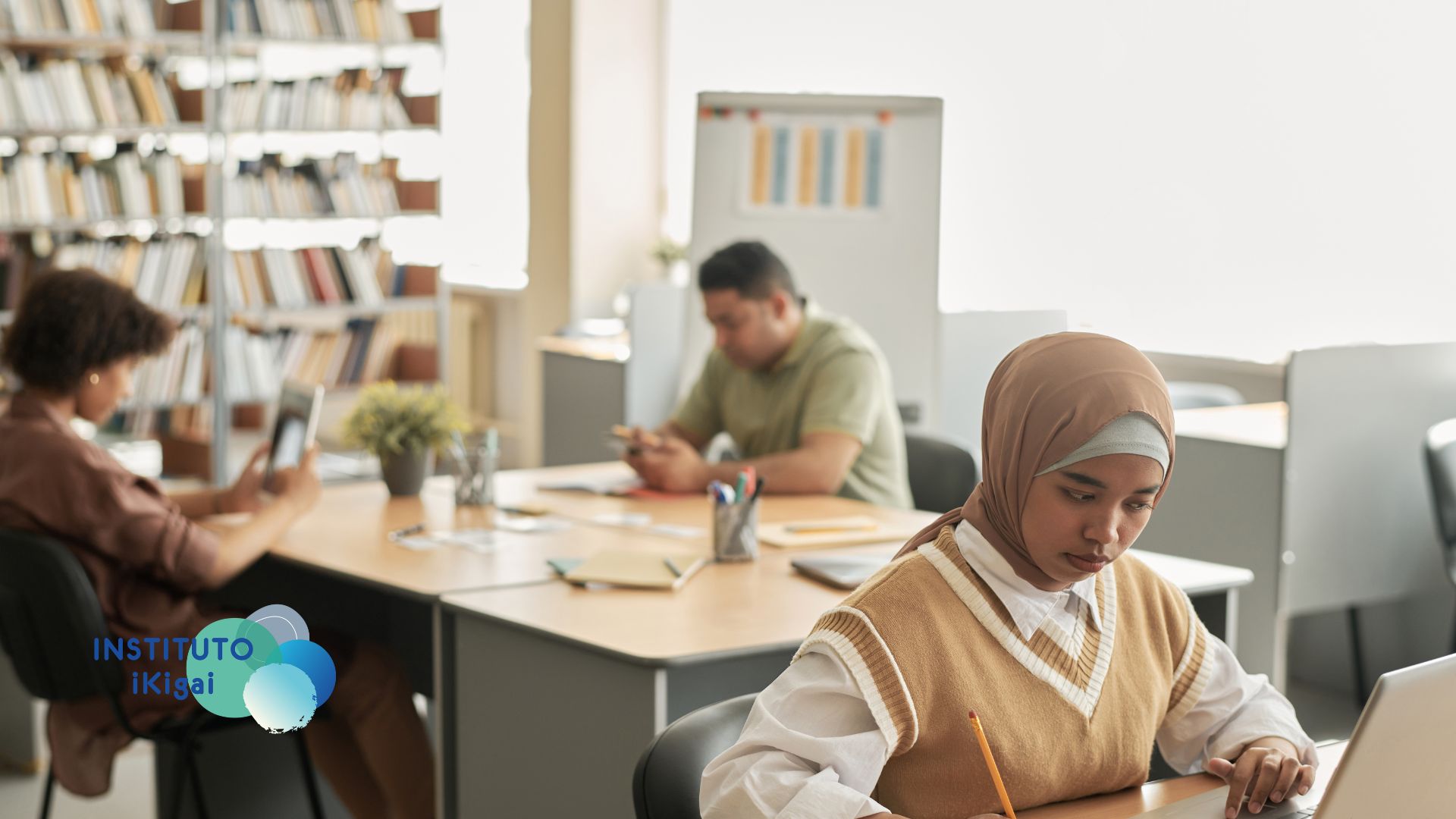
In response to increased migration in Europe and the challenges faced by migrant girls and women, the Ikigai Institute is actively involved in the Voices of Change (VOC) project, an initiative aimed at empowering young people with a migrant background through civic engagement and political participation. The VOC project focuses on strengthening their knowledge of rights and fostering their inclusion in policy development.
A comprehensive approach to inclusion and participation
Through a series of training courses, Ikigai is preparing a module on women’s rights and advocacy strategies. This module, which includes a review of legal frameworks and community change strategies, provides young migrant women with tools to advocate for their rights. In addition, the VOC project encourages the participation of these young women in the creation of a European Consultative Body for the Civic Participation of Migrant Girls, which will enable them to collaborate with local young women in Europe on policy recommendations for inclusion and solidarity.
Building a platform for representation and inclusion
The VOC project responds to a number of issues affecting migrant girls, such as lack of access to European institutions, limited knowledge of EU rights and lack of formal platforms for their voices. The initiative seeks to overcome these barriers by working with 22 organisations and developing opportunities such as internships, creating a strong platform for young migrant girls to influence policies that directly affect them.
A shared mission for social change
At the recent meeting in Rome, hosted by Tre University, the Ikigai Institute had the opportunity to deepen its understanding of the realities of migrant women and reinforce its commitment to inclusive social change. During this meeting, members of Ikigai and other organisations engaged in dialogue with migrant women, thus enriching VOC’ s focus on democratic engagement and inclusive representation.
Long-term goal
VOC aligns with EU priorities by promoting the civic participation and integration of young migrant and refugee women, thus creating a solid foundation for a more inclusive future. This project represents a significant step in building an intersectional policy framework that drives integration and strengthens the voice of young people from all communities in today’s Europe.

