



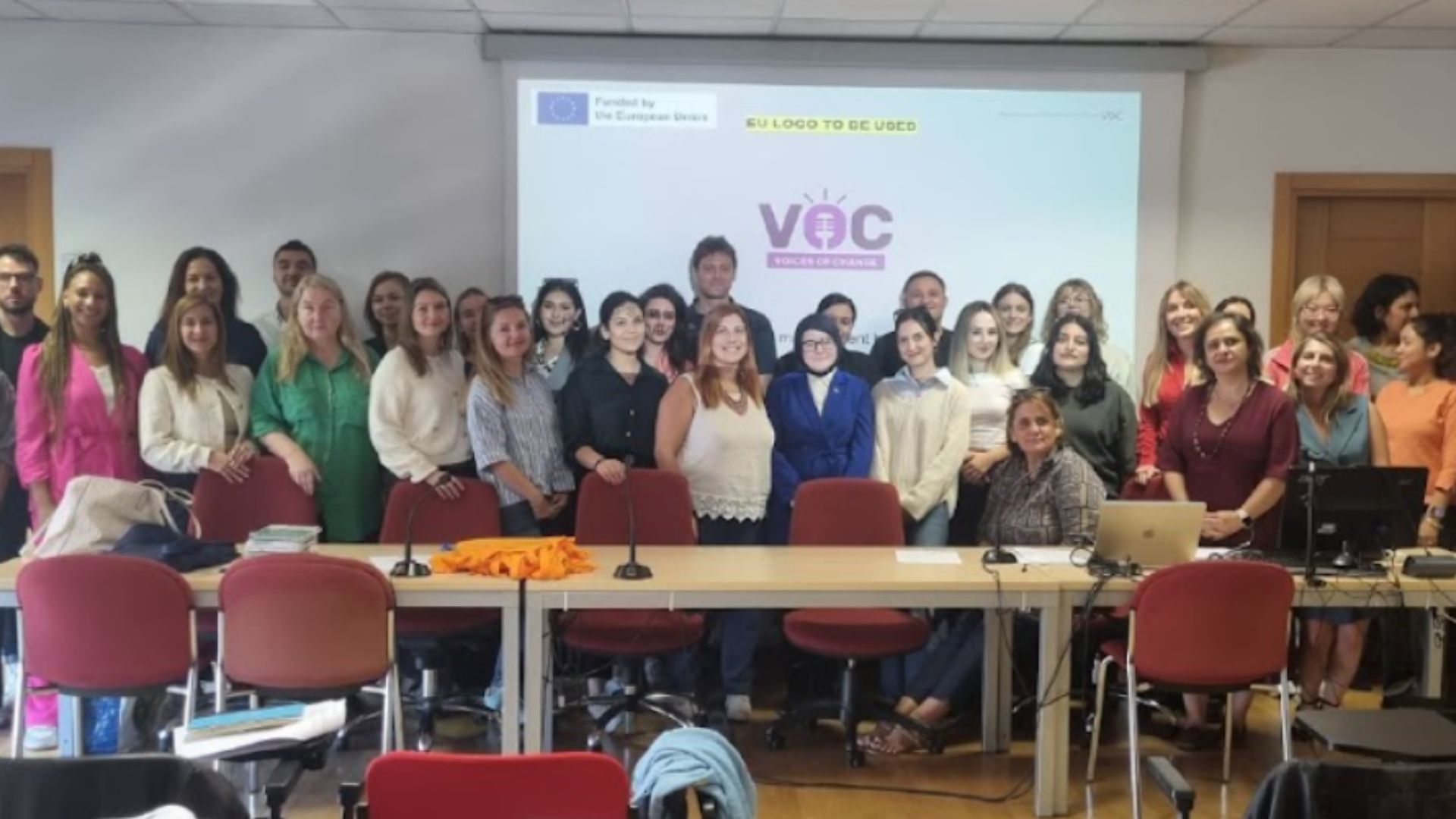
Migration is a central aspect of contemporary Europe, with millions of people crossing the continent’s borders every year in search of a better life, refuge or opportunities for growth. These migrations are not just statistics, but personal stories, including those of an often invisible group: young female migrants. Although they represent a significant portion of the migrant population, these young women face unique challenges when it comes to actively participating in the political and civic life of their host countries.
The challenges of political participation
Youth participation in democratic processes is an increasingly relevant issue in Europe, and while there is a growing disillusionment with traditional politics, this phenomenon is even more pronounced among young migrants. According to Eurostat data, young people with a migrant background, especially those from non-European countries, continue to face significant barriers to accessing civil and political rights, including the right to vote and the ability to participate in political parties. These barriers are often related to factors such as citizenship, migrant or refugee status, and social exclusion, which greatly limit their ability to influence decision-making processes at local, national and European levels.
Alternative forms of participation: activism and volunteering
Despite these challenges, many young migrants engage in alternative forms of civic participation, such as volunteering and activism, which do not require direct participation in formal political institutions. These forms of civic engagement, often not recognised as traditional forms of participation, demonstrate that the lack of political involvement is not due to disinterest, but to a system that fails to include all social groups. A Council of Europe report highlighted how young migrants, despite not being able to access official political channels, are very active at the local level, participating in volunteer projects, social movements and community initiatives. These alternative spaces allow them to make their voices heard and contribute to social change, all while remaining outside traditional political processes.
Young migrants and their specific challenges
Young migrants, in particular, represent a vulnerable segment of the migrant population, despite being one of the most prominent components of migration flows to Europe. However, their voices are often ignored, both in decision-making processes and in public debates. According to the UN, migrant women have a unique potential to promote intercultural dialogue, due to their experiences of cultural crossover and the common challenges they face on their migration journey. However, despite this potential, young migrant women are often excluded from political participation processes due to:
– Lack of political representation: In many European countries, political rights are closely linked to citizenship, which excludes young migrant women from participating in elections and other democratic mechanisms.
– Structural discrimination: Institutional and legal barriers prevent young migrant women from accessing positions of power, further limiting their influence on political decisions.
– Gender and cultural bias: Discriminatory stereotypes based on gender and culture continue to limit opportunities for migrant women’s participation, perpetuating a narrow and marginalising view of their role in society.
The VOC Project: An Opportunity for Change
In this context, initiatives such as the VOC (Voices of Change) project offer a concrete example of how the political participation of young migrant women can be promoted. VOC aims to create a space for young migrant women to actively participate in the formulation of public policies that affect them. The project is working on the creation of a European Consultative Body for Young Migrants, which will enable them to share their experiences, contribute to migration policies and interact directly with European institutions.
VOC’s strength also lies in the collaboration between young migrants and local youth, fostering intercultural dialogue and social inclusion. This mutual learning environment leads to greater understanding between communities, helping young migrant women to develop practical and leadership skills. These skills are crucial not only for their social and professional integration, but also for their future as active and informed European citizens.

