

Music has a unique ability to connect people. However, creating truly inclusive musical spaces requires more than openness and good intentions. It requires collaboration, shared learning and, above all, listening to the voices and experiences of people with disabilities.
This is the core purpose of BEAT: Bringing Equality, Accessibility and Togetherness, a European project focused on making music education and participation more accessible, inclusive and welcoming for everyone.
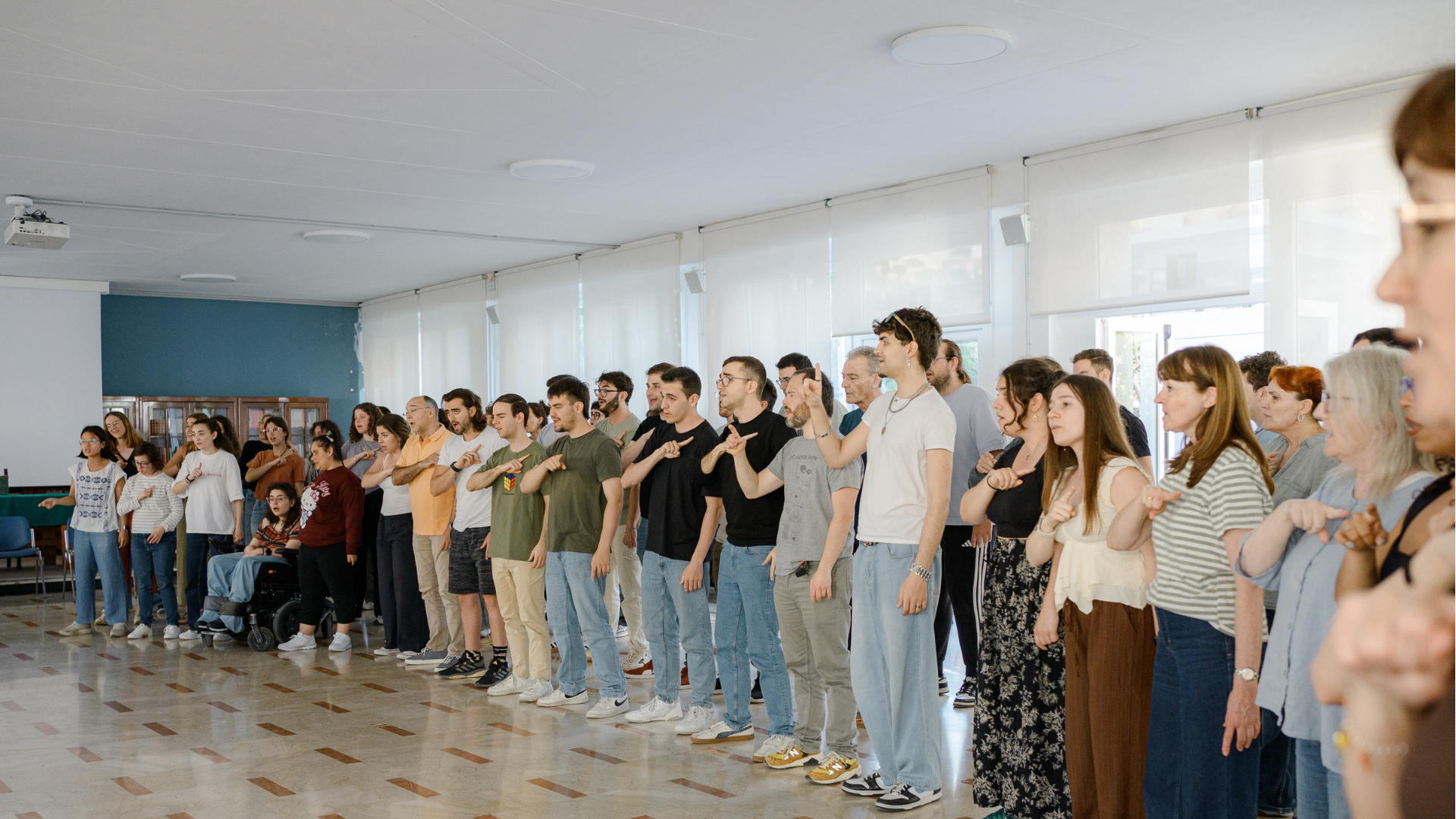
From 23 to 26 April 2026, representatives from Spain, Italy and Germany gathered in Palermo, Italy, for the project’s Learning, Teaching and Training Activity (LTTA). The activity brought together four experts from each partner country to exchange experiences, explore inclusive methodologies and begin shaping practical resources for more accessible musical environments.
Learning from shared experience
One of the main strengths of the Palermo meeting was the diversity of the participants. The group included professionals from the fields of music, disability inclusion, youth work and education, as well as experts with lived experience of disability.
This ensured that inclusion was not only a topic of discussion, but a principle actively reflected in the way the activity was designed and implemented.
Over four days, participants shared practices from their own organisations, discussed common challenges and analysed successful experiences already being carried out across Europe. The sessions focused on key topics such as accessibility, participation, multisensory learning and inclusive music education, with special attention to how these approaches can be adapted to different local contexts.
Instituto Ikigai was proud to collaborate with Christian García, musician and collaborator with ONCE Valencia, who shared his extensive experience working with people with visual impairments. Through practical demonstrations and real-life examples, participants explored how rehearsals, musical direction and communication can be adapted so that blind and visually impaired musicians can participate fully, confidently and independently.
These exchanges highlighted an essential idea: accessibility is not about creating exceptions. It is about rethinking how music is taught, shared and experienced so that everyone has the opportunity to take part and contribute.
Inclusion in practice
Throughout the workshops, participants tested a wide range of inclusive activities and methodologies, including multisensory exercises, inclusive warm-ups, body percussion, sign-language singing, techniques for working with blind singers and collaborative learning dynamics.
The sessions also reinforced a key message: people with disabilities must be involved in the design, development and decision-making processes of any initiative that aims to be truly inclusive.
“Nothing about us without us. I think it captures an important aspect of inclusion, because we need to take everyone’s voice and opinions into account if we want to create a project that truly responds to the needs of all.”
LTTA participant
Next steps for the BEAT project
The Palermo LTTA represents an important milestone in the BEAT journey, but it is only one step in a broader process.
Following the training activity, each partner organisation will develop a series of practical workshops inspired by the methodologies and experiences shared in Palermo. These workshops will be implemented locally in Spain, Italy and Germany, allowing partners to test inclusive music activities with participants in their own communities.
The knowledge, feedback and results gathered from these local experiences will then be brought together in a practical toolkit of best practices for inclusive music education. This resource will support choir leaders, educators, youth workers and organisations by providing concrete tools to create more accessible, participatory and welcoming musical spaces across Europe.
The project will culminate in December 2026 with a final concert in Zaragoza, Spain, bringing together participants from all partner countries to celebrate music, inclusion and European collaboration.
Through BEAT, partners continue working towards a shared goal: making music a space where everyone can belong, participate and be heard.

