



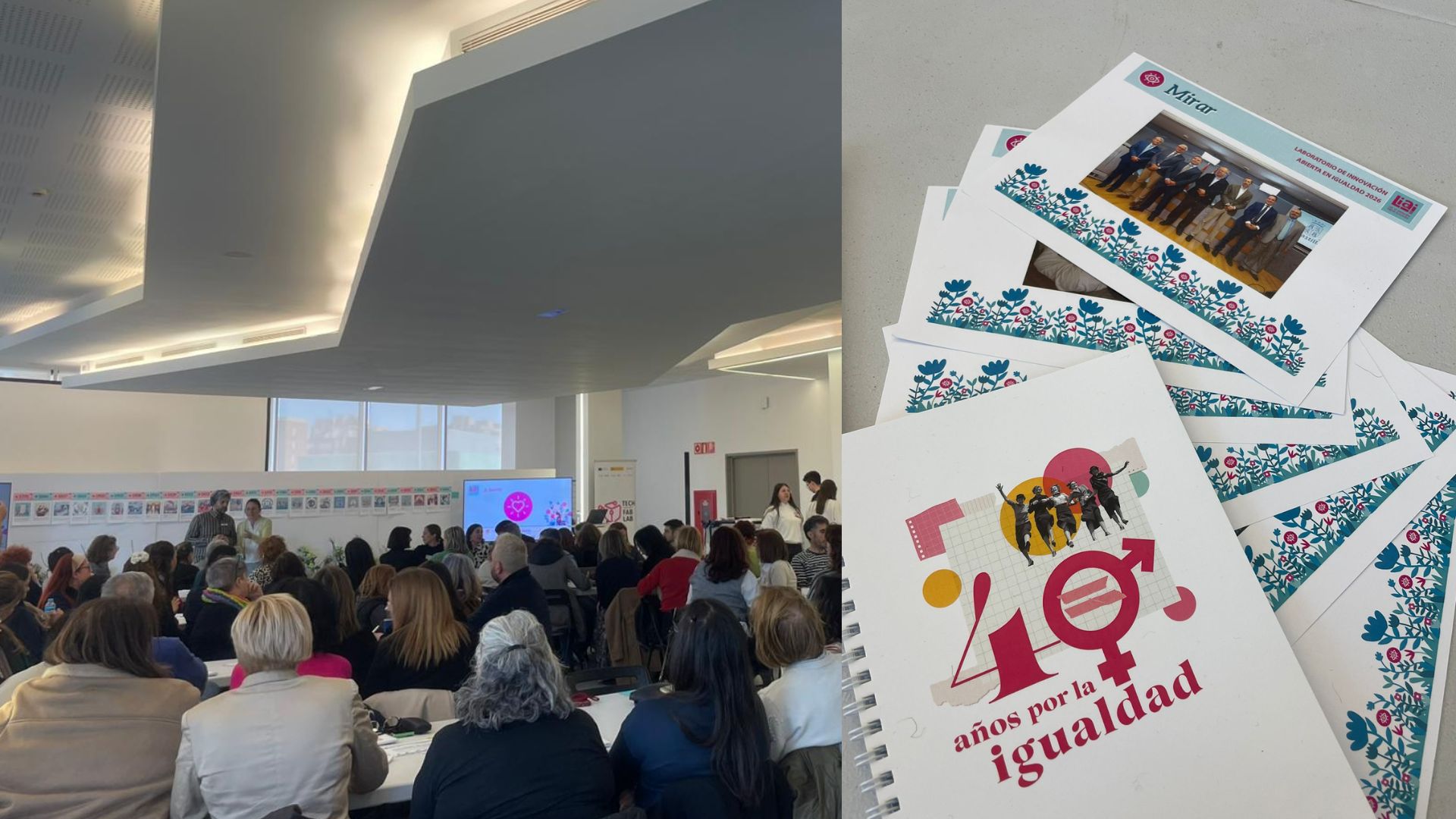
In Zaragoza, the third edition of the Open Innovation Laboratory for Equality (LIAI 2026) brought together participants to reflect, collaborate, and envision a more inclusive society. Organized by the Equality and Women’s Affairs Department of the Zaragoza City Council and the Init Group, through CIEM Zaragoza, the event unfolded across four interconnected phases, with each roundtable promoting active exchange and collaboration.
The Ikigai Institute participated in the initiative as a collaborating organization. We are pleased to have contributed to this project, as it reflects fundamental values we strongly uphold, such as inclusion, equality, and the promotion of diversity as a source of enrichment for both society and our own organization. For these reasons, we are delighted to have supported the initiative and to be part of its development.
The experience began with the looking phase, in which participants critically observed images and visual materials to reflect on gender representations, identifying both stereotypes and positive narratives. This phase also included the co-creation of a timeline of women’s achievements in Spain, fostering a shared historical awareness and a sense of collective progress.
From observation, the process moved on to feeling, introducing a sensory and relational dimension. Guided by a musician and inspired by Pauline Oliveros’s deep listening practices, participants explored sound through voice and instruments, fostering cohesion and co-creating immersive soundscapes that culminated in a shared vocal meditation.
The journey continued with mover, where the body became a tool for expression. Participants worked in groups to recreate scenes and explore social dynamics through movement, fostering connection, trust, and a shared sense of unity beyond words.
Finally, in the actuar phase, participants were invited to project themselves into the future. These visions took shape through drawings, transforming ideas into tangible and shareable representations of change.
Building on these shared visions, the experience as a whole highlighted the value of collective reflection and collaboration, empowering each participant to play an active role in building a more just and inclusive society.

