



Women’s political participation has advanced in recent decades, but data shows that true equality is still far from being achieved. According to data from UN Women, women occupy approximately 26% of parliamentary seats worldwide. In the European Parliament, following the last elections, female representation stands at around 39%, a significant figure but still insufficient to speak of full parity.
When we talk about women of migrant origin, the gap is even wider. Various European studies indicate that migrant and racialized women are clearly underrepresented in political decision-making spaces. They often face multiple barriers: gender, ethnic origin, socioeconomic status, and limited access to networks of political influence.
It is precisely in response to this reality that the VOC – Voices of Change project was born, an initiative that seeks to reduce the political participation gap, strengthen democracy, and promote civic engagement among young women, especially those with a migrant background.
Ikigai at the European Parliament
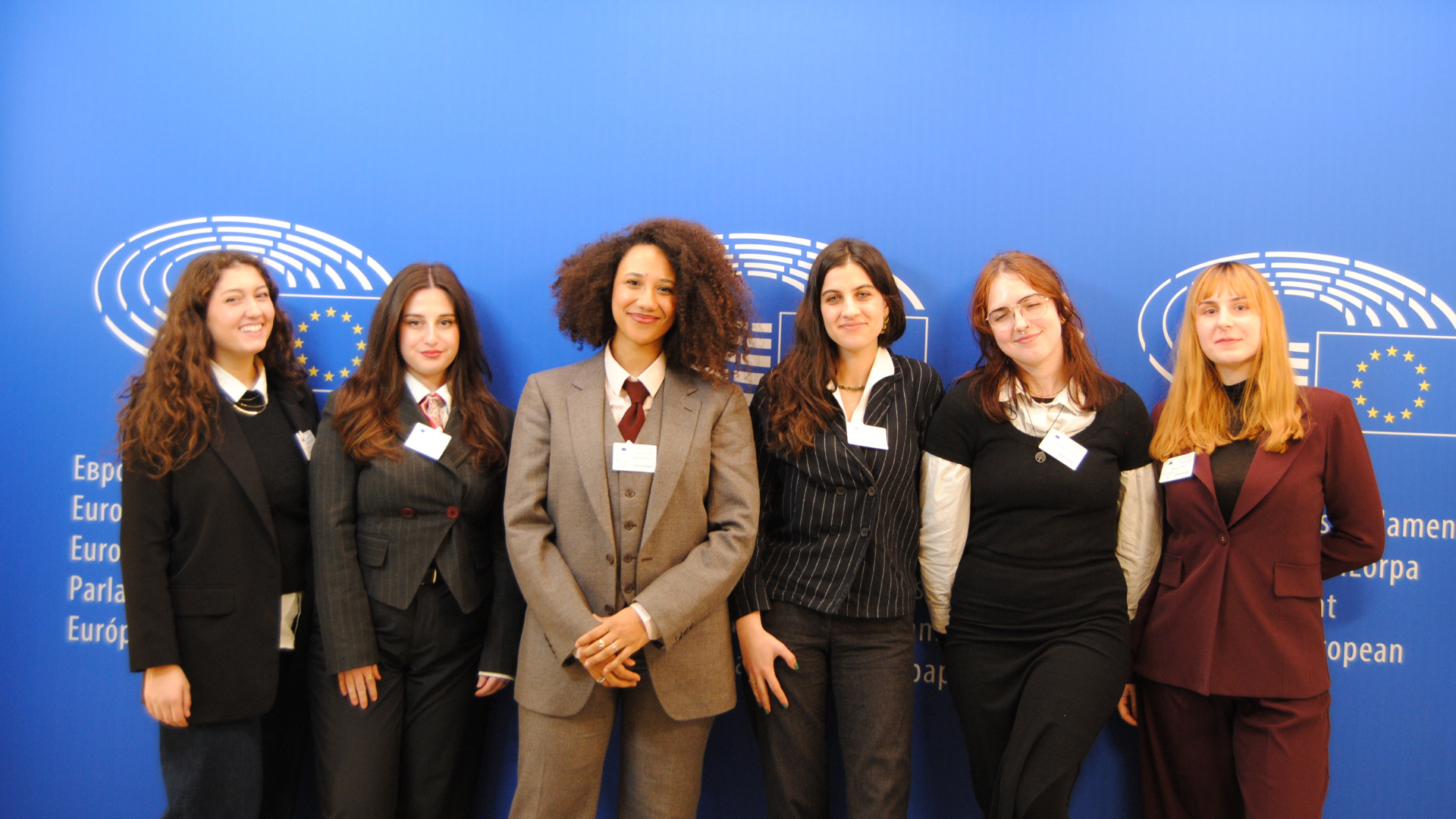
As part of the VOC project, the Ikigai Institute had the great honor of traveling to Brussels with five young women of migrant origin, who presented their public policy recommendations to the European Parliament.
The recommendations focused on creating more inclusive political spaces, strengthening mechanisms for democratic participation, and designing public policies that are sensitive to cultural and gender diversity.
The proposals were presented to the Vice-President of the European Parliament, Pina Picierno, and other European political representatives, including:
– Giorgio De Bin, Secretary General of the Italian Chamber of Commerce in Belgium
– Giulio Venneri, Head of Unit, Directorate-General for Neighborhood and Enlargement Negotiations (DG ENEST), European Commission
– Katia Lenzing, Head of Unit for Gender Equality, Directorate-General for Justice and Consumers (DG JUST), European Commission.
Democracy, inclusion, and civic engagement
The VOC project not only seeks to highlight inequality, but also to transform it in a structural and sustainable way. It promotes female leadership, political empowerment, and the development of an active, critical citizenry committed to democratic values.
The dialogue between our young women and political representatives was a deeply meaningful moment. Young people who have historically been marginalized from decision-making spaces finally took their rightful place: at the center of democratic debate. Seeing how their public policy recommendations were listened to attentively by institutional leaders fills us with hope and reinforces our conviction that change is possible.
We are now confident that these proposals can be translated into concrete measures that promote more inclusive and diverse participation in European political life.
We are proud to be part of this process of transformation, although we know that the journey does not end here. Very soon we will travel to Rome to continue expanding the impact of the project and strengthen this political advocacy work.

